Shiki
is the architecture of action. It applies structural thinking to brand infrastructure, predicting where things break before the first pixel is drawn. It’s the practice of getting the foundation right so the work can hold up under pressure.
Context
The cycle repeats across industries
Brands launch with energy and clarity, then quietly lose coherence over time. Not because the creative work fails, but because the decision-making systems underneath it can’t hold the weight.
Leadership shifts priorities. Market pressure dilutes intent. Execution drifts. Months of work get scrapped and rebuilt. The pattern continues.
The question isn’t what breaks. It’s where.
Insights
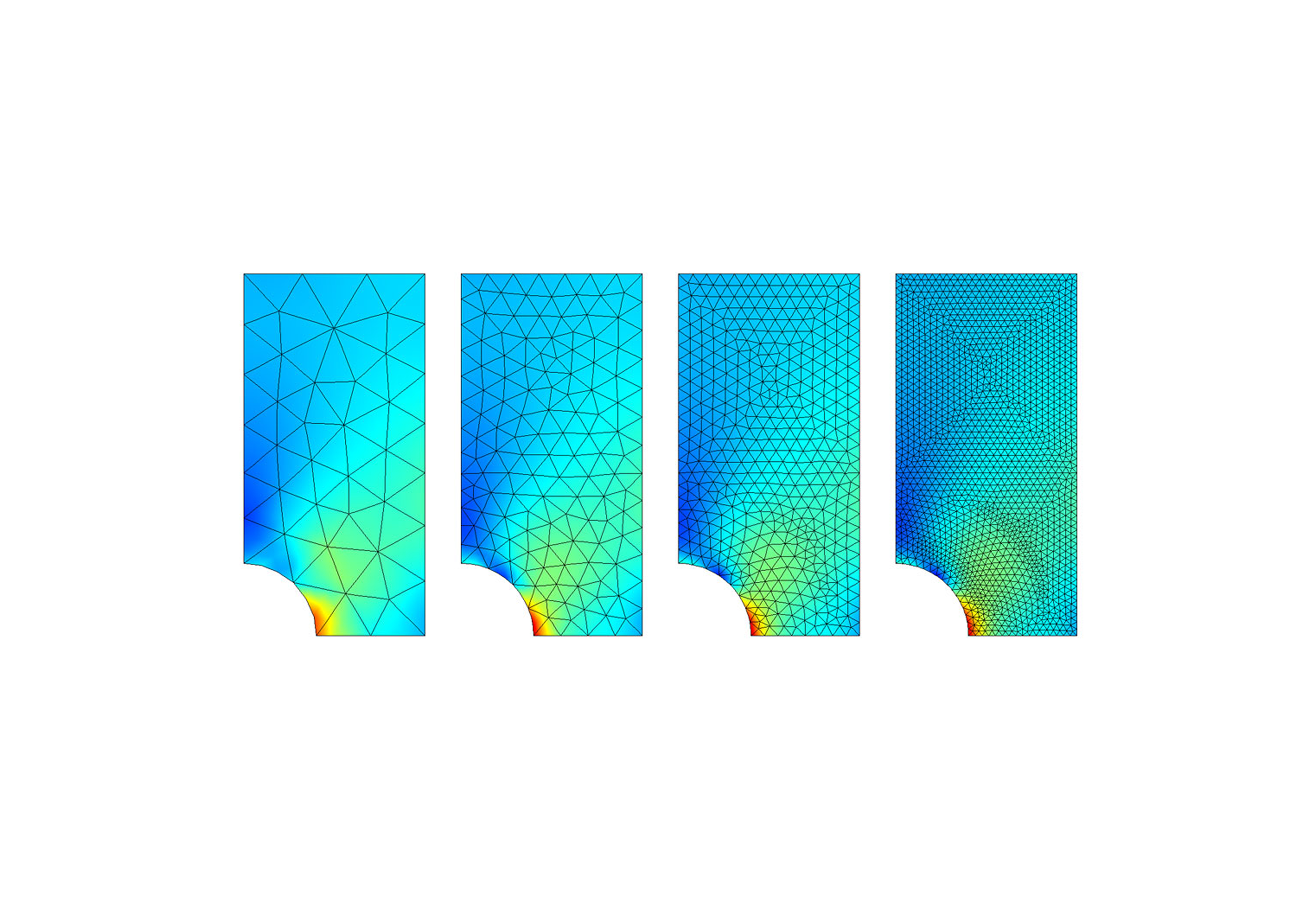
Structural stress mapped via adaptive mesh refinement. Source: COMSOL.The Mesh
My father’s work in aerodynamics and mechanical engineering relied on the Finite Element Method (FEM) for structural analysis, heat transfer, and fluid dynamics. FEM breaks complex systems into smaller parts to map pressure points and see where stress accumulates. It shows which parts bend first and which collapse under load.
This lab applies that same engineering logic to brand work.
In our case, the mesh isn’t made of materials. It’s made of decisions.
When “the mesh” is coarse or fractured, specific patterns of structural failure emerge:
Ambiguity: Avoiding early clarity leads to delayed decisions and misaligned execution
False consensus: Partial alignment gets mistaken for total agreement, creating uncalibrated shifts in direction
Reactive pivots: Fear of committing early results in last-minute changes that invalidate months of work
Vacuum of ownership: Without clear decision rights, conflicting stakeholder input creates gridlock
This isn’t an execution problem. It’s a structural one.
McKinsey found that inefficient decision-making costs a typical Fortune 500 company over 530,000 manager days and roughly $250 million in annual wages.
That’s not a rounding error—it’s a failure of decision quality at scale.
Approach
The Map
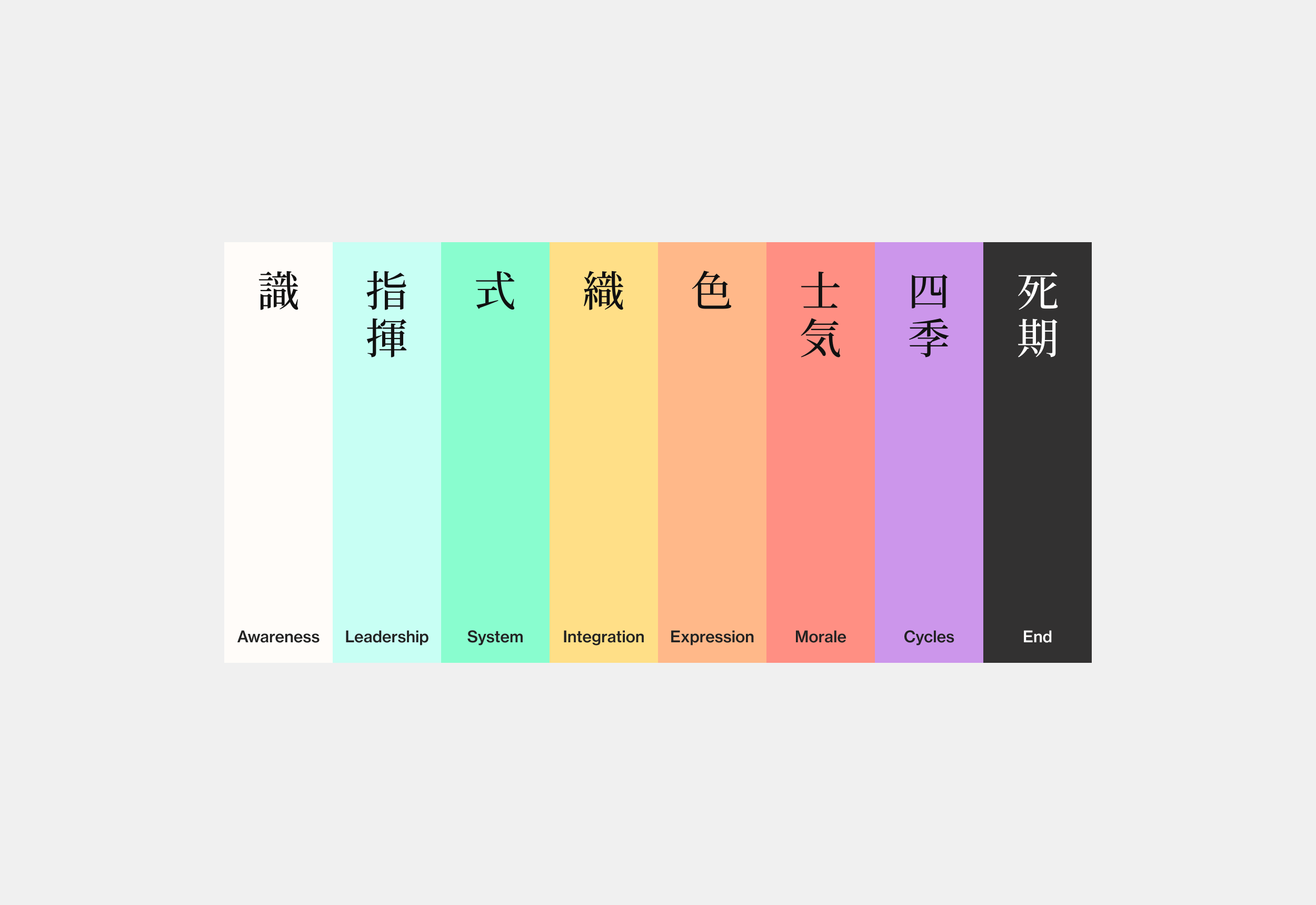
To navigate these fractures, I utilize a single word: Shiki. In Japanese, this sound carries multiple meanings that mirror the full lifecycle of an organization. Each facet reveals a different way the mesh can fail, and a different way to reinforce it.
| Facet | Description | Diagnostic | Guardrail |
|---|---|---|---|
|
Awareness (識)
|
Detecting blind spots and filtering noise | Is the signal clear, or is the response just reacting to static? | Pause execution if market signals diverge more than 15% from stated intent. Don't automate what can't be verified. |
|
Leadership (指揮)
|
Identifying unowned decisions and decision debt | Who actually carries the weight of this call? | No agent—human or AI—acts without a Directly Responsible Individual (DRI). Accountability can't be distributed into oblivion. |
|
System (式)
|
Mapping where workflows fracture under pressure | Where does the process break when speed increases? | Don't scale if operational bottlenecks already exceed baseline capacity. Speed without structure compounds failure. |
|
Integration (織)
|
Analyzing cross-functional friction and cultural alignment | Are departments moving together, or just parallel? | Require cross-department validation for high-stakes execution. Alignment isn't assumed—it's confirmed. |
|
Expression (色)
|
Maintaining tonal and visual integrity | Is velocity eroding the brand's aesthetic soul? | Flag assets that deviate from established visual DNA. Consistency isn't rigidity—it's coherence. |
|
Morale (士気)
|
Measuring the burnout index | Is speed fueled by excitement, or fear? | Throttle output frequency if team sentiment scores drop. Sustainable pace beats heroic sprints. |
|
Cycles (四季)
|
Observing seasonal rhythm in the work | Is growth being forced during a dormant phase? | Adjust automation speed based on the natural project lifecycle. Not everything needs to move at the same tempo. |
|
Endings (死期)
|
The ability to sunset what no longer serves | What's being kept alive by ego alone? | Automatically pause resources for projects failing to hit KPIs. Letting go is part of structural health. |
Organizations don’t collapse suddenly. They enter the winter phase—natural cycles of dormancy where rest enables the next season of growth. Constant output ignores this metabolic reality.
The brands that endure recognize when to pause and when to push.
The Focus
This lab exists to address the friction of speed by building tools for decision clarity.
AI has collapsed the traditional timeline—frameworks can now be prototyped in hours rather than days. But that amplification also exposes cracks more quickly. If the foundation isn’t sound, velocity just accelerates the collapse.
The work focuses on building practical prototypes for risk assessment, ownership mapping, and tradeoff visibility. The goal is to ensure that when an organization moves, it does so on a foundation that’s already been pressure-tested. Not because perfection is possible, but because structural integrity is.
This is what I call Design before Design.
Related : Design Request, eisha
Origin
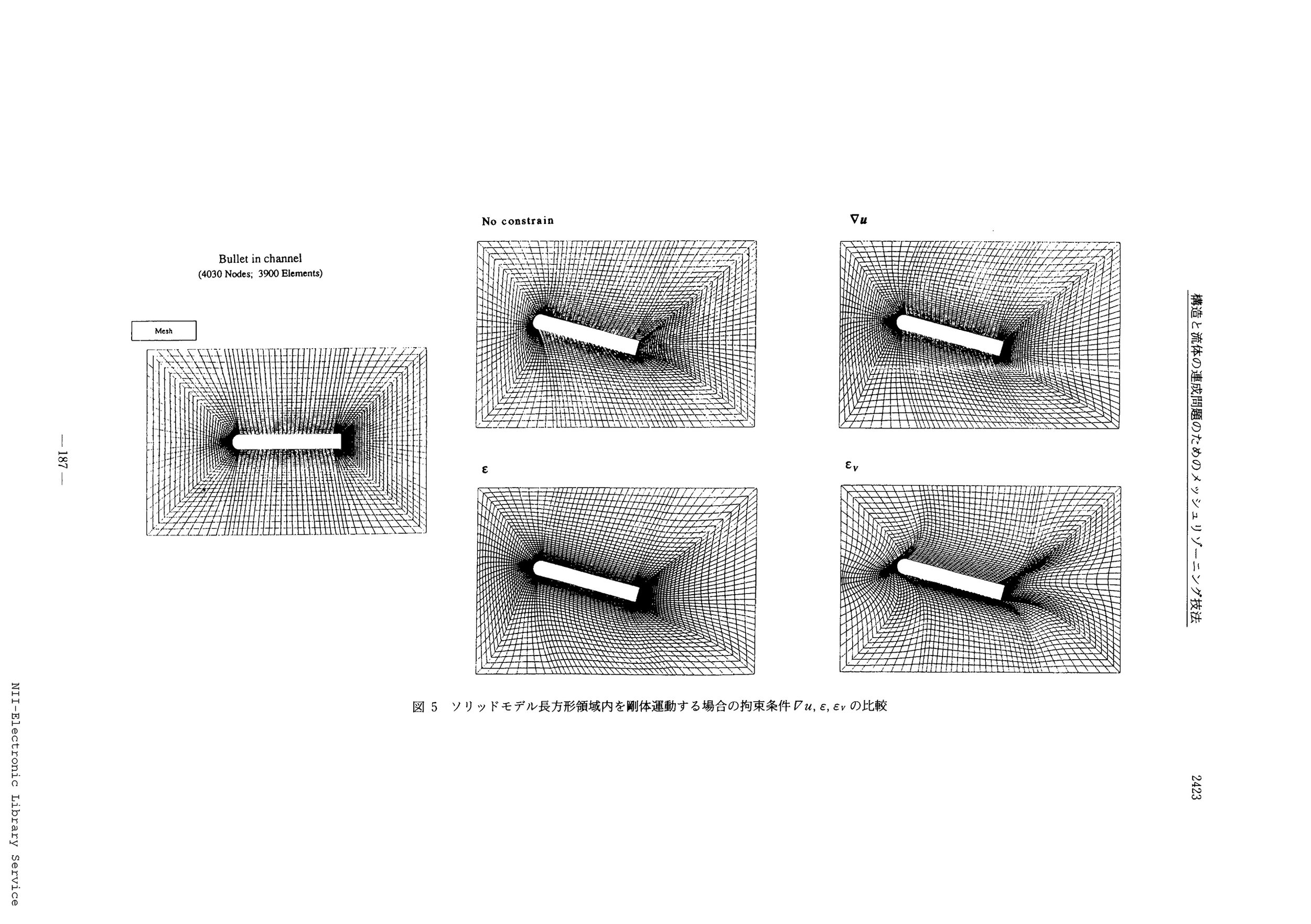
Mesh Rezoning Technique (1993) Dr. Yoshihiro Taki & Dr. Hiroshi Torii. I remember the “meshy” graphics* my father used to print from a Macintosh Classic at his lab—grids bending under invisible forces. It was my first exposure to the idea that you could see stress before it became a break.
*Image above—A Finite Element simulation showing how a rigid object deforms its surrounding structure—re-meshing the grid in real time to reveal where stress accumulates, and failure begins.
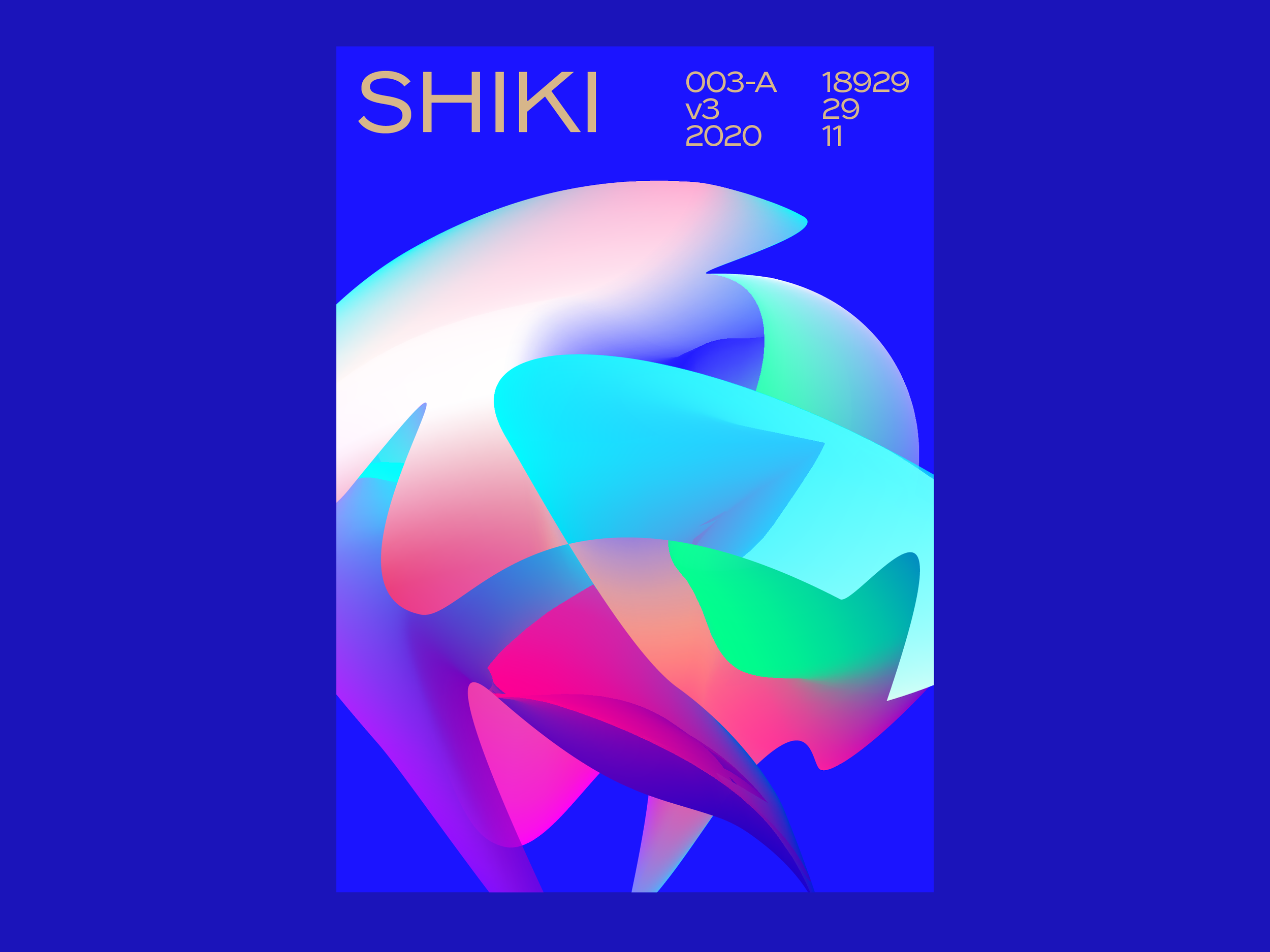
Shiki started as just a word—something to organize early design experiments in abstract forms and gradient meshes. Over time, its deeper meanings revealed themselves: awareness, cycles, endings. It wasn’t until later that I recognized the connection to my father’s work, but it was there all along: the same way of breaking systems down to see where they fail.
Different tools, same lens.
Published:january 24, 2026 | updated:January 30, 2026