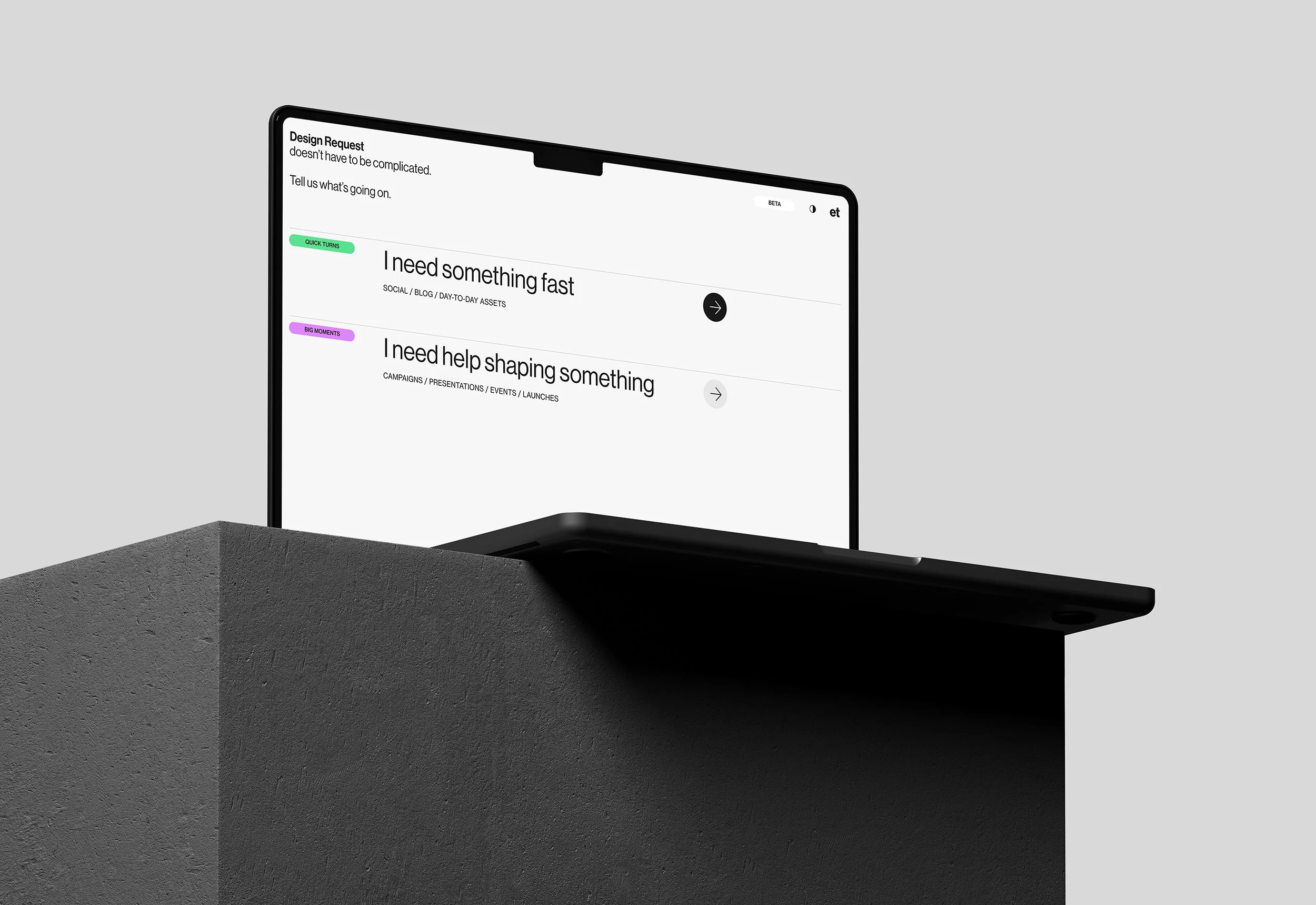
Design Request
is how this lab translates leadership intent into execution velocity. Built on the Shiki approach, it bridges the gap between what needs to happen and what teams need to deliver—turning fragmented context into clear creative direction without the friction of endless briefs or misaligned starts.
Context
The Velocity Trap
In the creative industry, we have optimized for speed at the cost of clarity. As work moves faster through async tools and Slack channels, nuance and intention often evaporate before the first asset is created.
The problem isn’t the tools—it’s what happens when organizations enter a state of Unconscious Speed. Teams feel it: the rehashed briefs, the pivots that invalidate days of work, the sense that clarity got lost somewhere between leadership and execution.
Design Request addresses this: How do we gather the right context without slowing teams down?
By creating a structured intake that translates fragmented pressure into focused direction, we ensure language, framing, and accountability are clear before execution begins.
Insights
The Cost of Ambiguity
Ambiguity is the most expensive invisible line item in a creative budget. When decisions are delayed, unowned, or poorly communicated, the creative team becomes the shock absorber for upstream confusion.
The Reality
Inefficient decision-making costs a typical Fortune 500 company roughly $250 million in annual wages annually. This isn’t an execution problem—it’s a failure of intake clarity.
Design Request removes the friction that derails good work:
Eliminating rework by surfacing constraints before they invalidate days of effort
Establishing ownership by defining clear accountability for every initiative
Protecting momentum by reducing the burnout of reactive pivots and false urgency
Approach
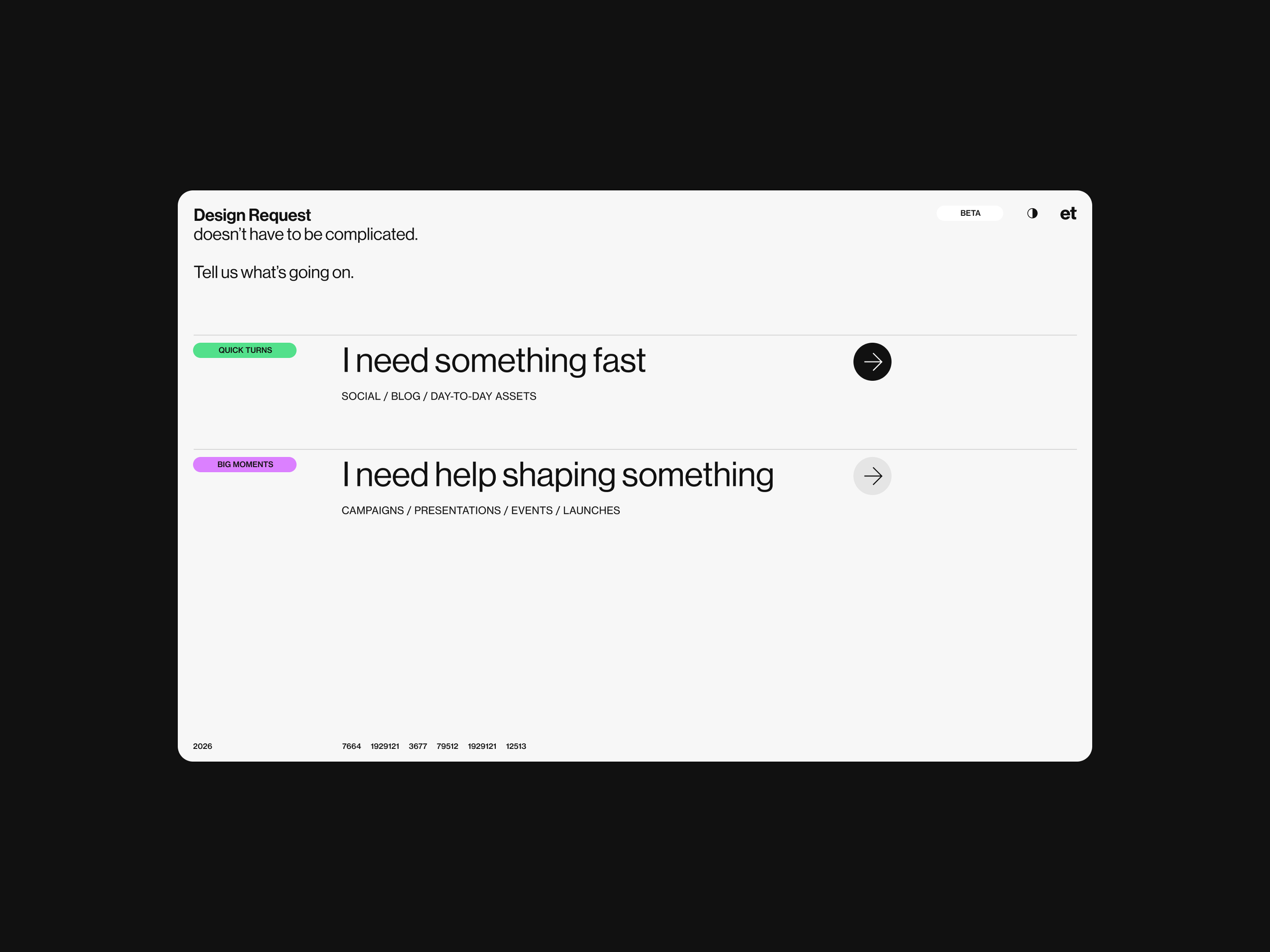
Two Paths to Clarity
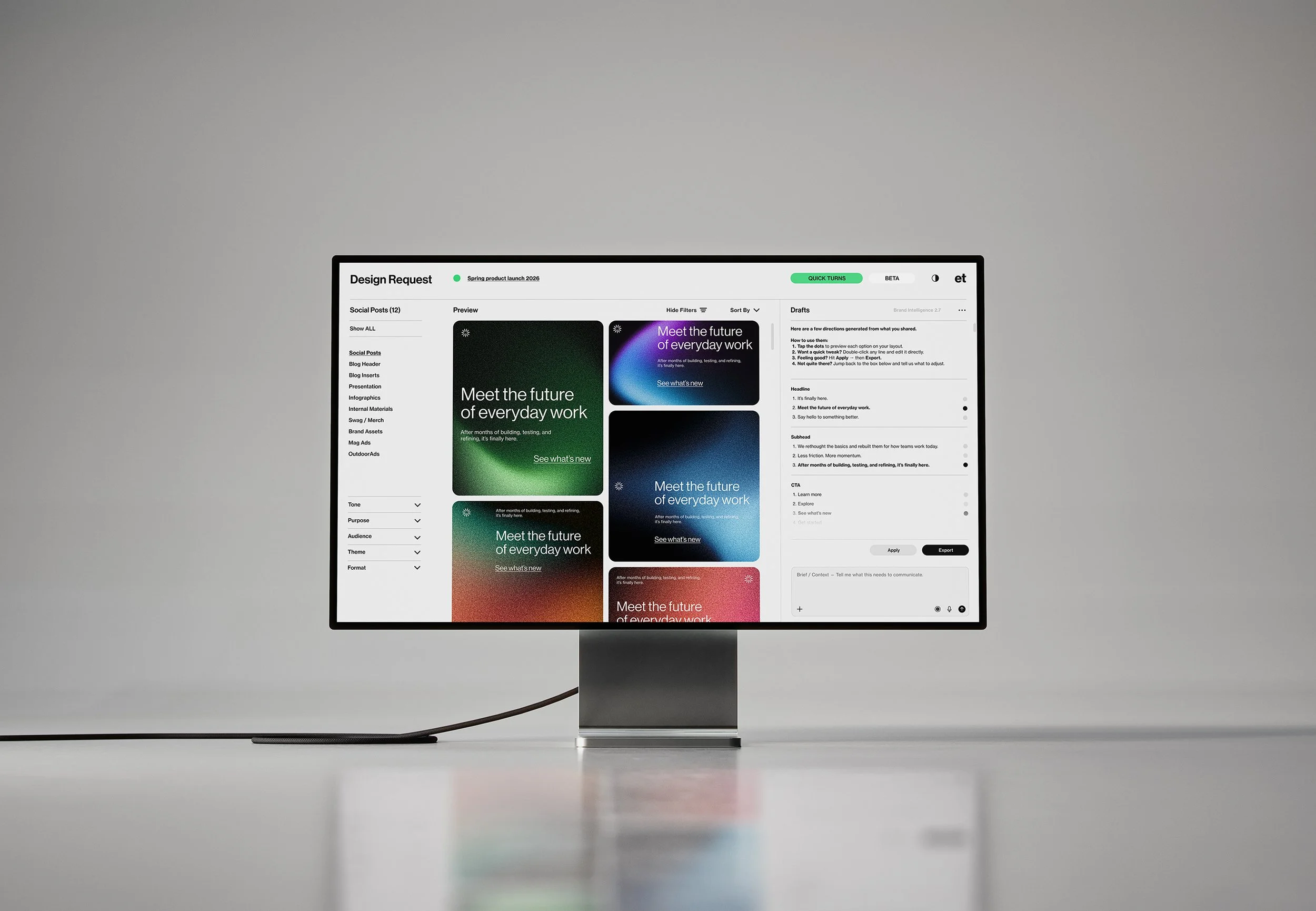
This prototype addresses intake by offering two distinct paths—ensuring the structure matches the weight of the need.
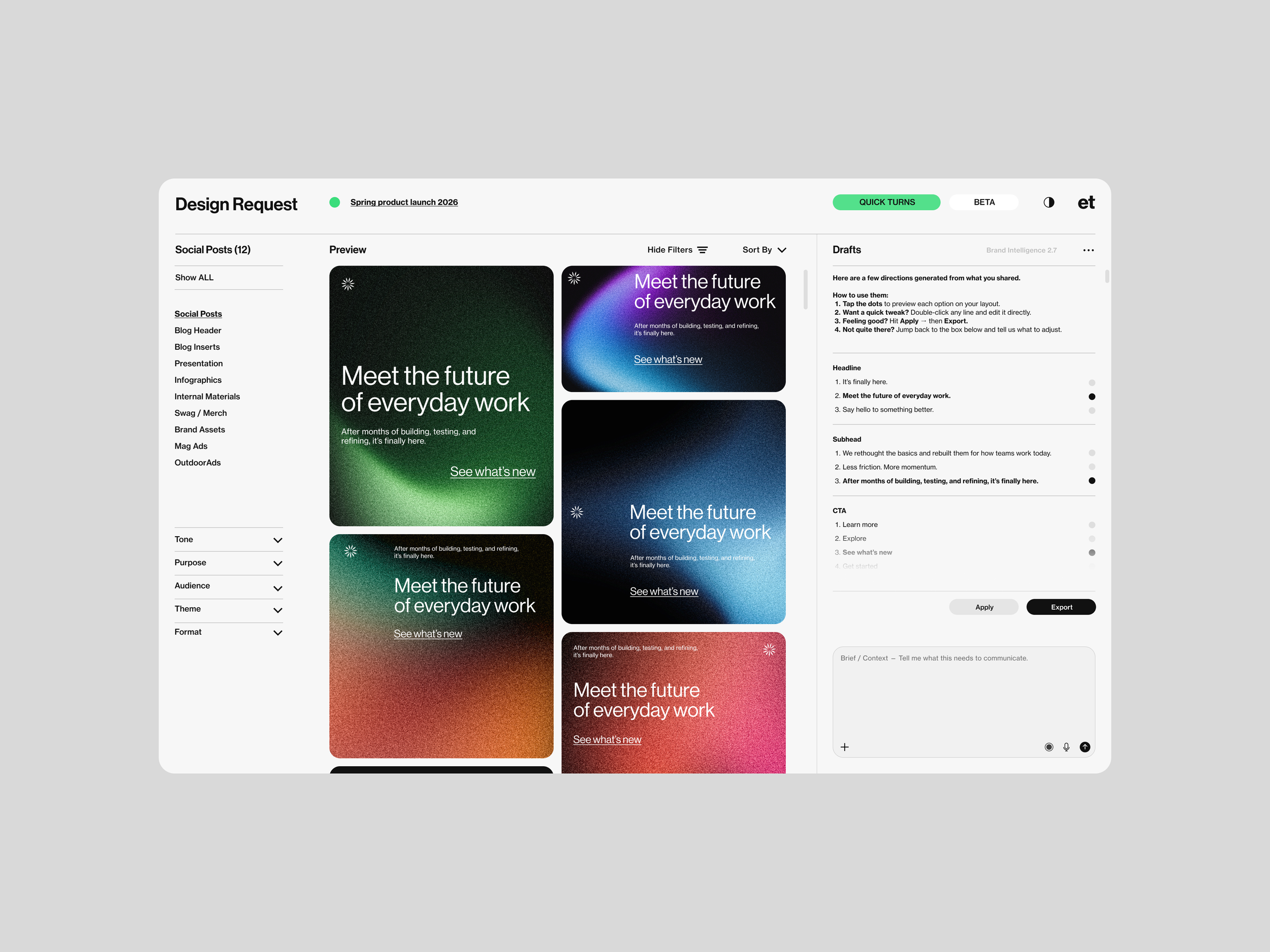
Path 1: Brand Templates (Quick Turns)
For everyday needs—social posts, blog graphics, simple assets. Requesters browse brand-approved templates with intelligent copy support that updates layouts in real time.
The goal: Speed with integrity. Fast execution while maintaining visual and tonal coherence
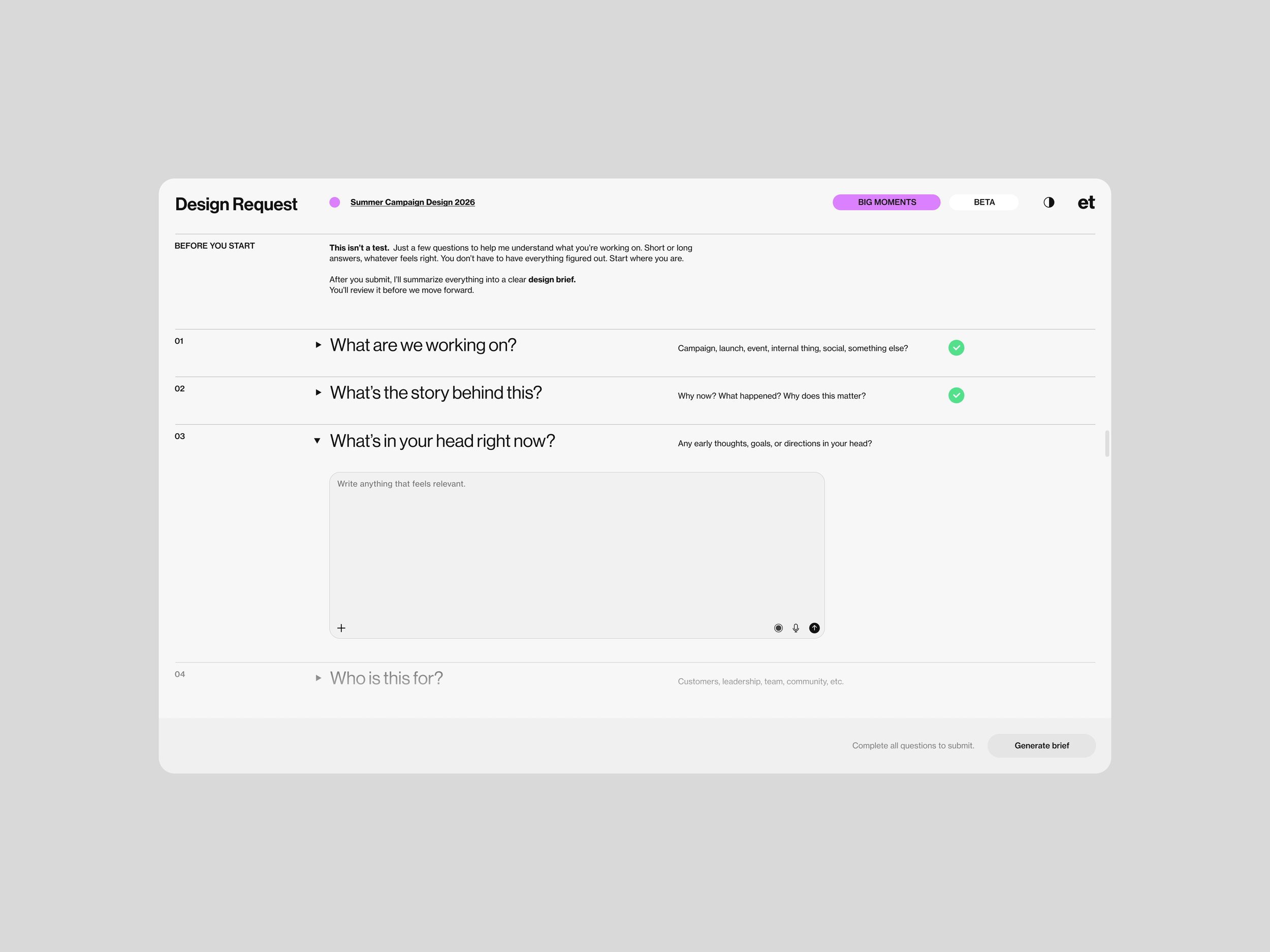
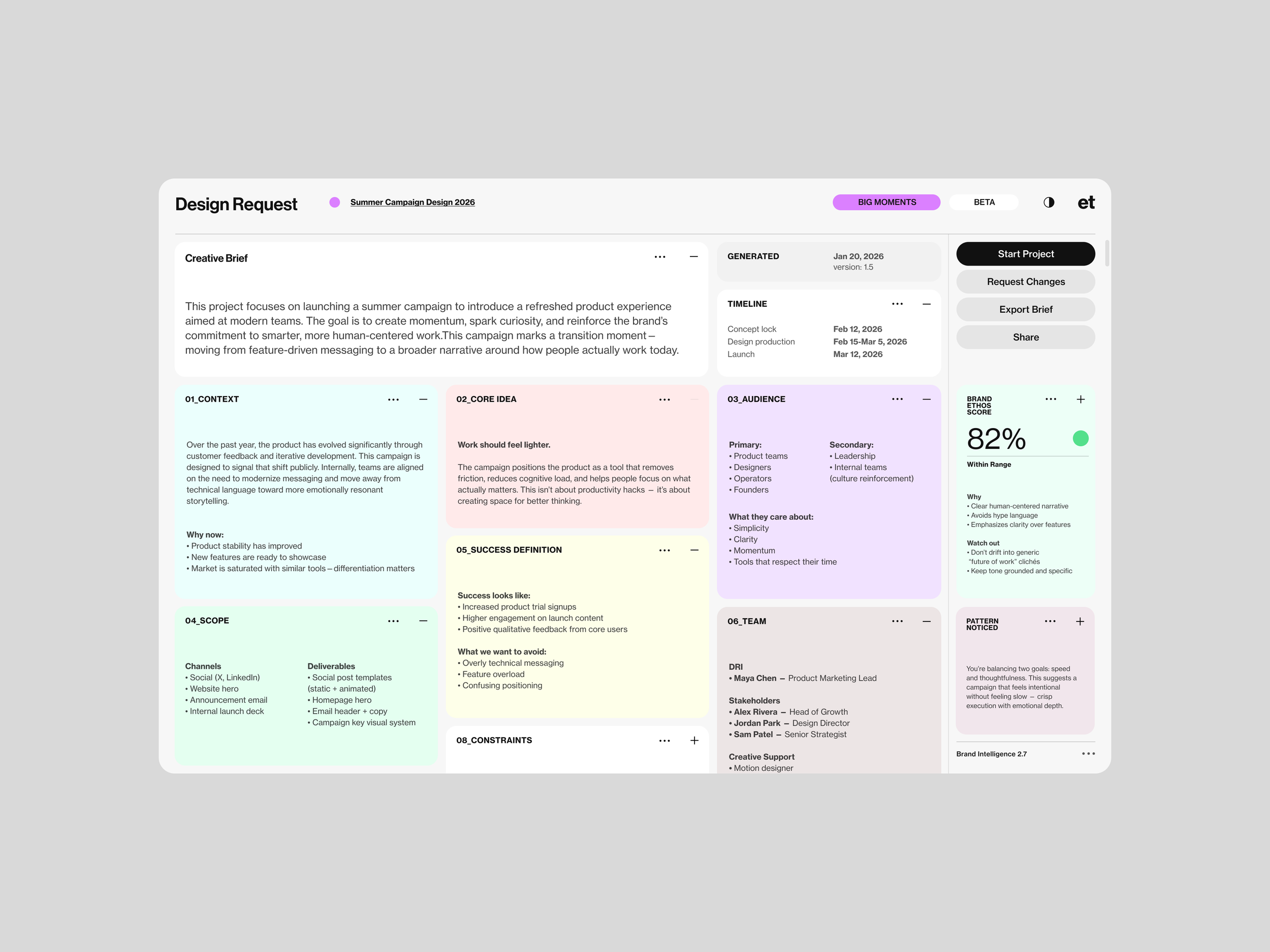
Path 2: Guided Dialogue (Big Moments)
For larger initiatives—campaigns, product launches, internal storytelling. Requesters engage in a structured conversation using voice or text. Thoughtful prompts surface the real constraints, strategic goals, and “cold sweat” realities that rarely make it into a Slack thread.
The goal: Depth without friction. Gathering the right information upfront so cross-functional teams can align faster.
The output: From Context to Confidence—Once submitted, the system synthesizes inputs into a structured Creative Brief. This isn’t just documentation—it’s a decision quality checkpoint. It defines scope, success metrics, and ownership. It evaluates alignment with brand intent and flags requests that feel reactive or fear-driven for human review. We’re building confidence and coherence, not just pixels.
Next Steps
This is the beginning.
The prototype will continue to evolve through testing, iteration, and real-world use.
Planned explorations:
Refining the intake without adding complexity
Version history and iteration tracking
Personal dashboards for request visibility
Prototyping and testing in v0
Deeper synthesis intelligence
Updates will be shared as the work progresses.
Related: Shiki
Published:january 20, 2026 | updated:January 28, 2026