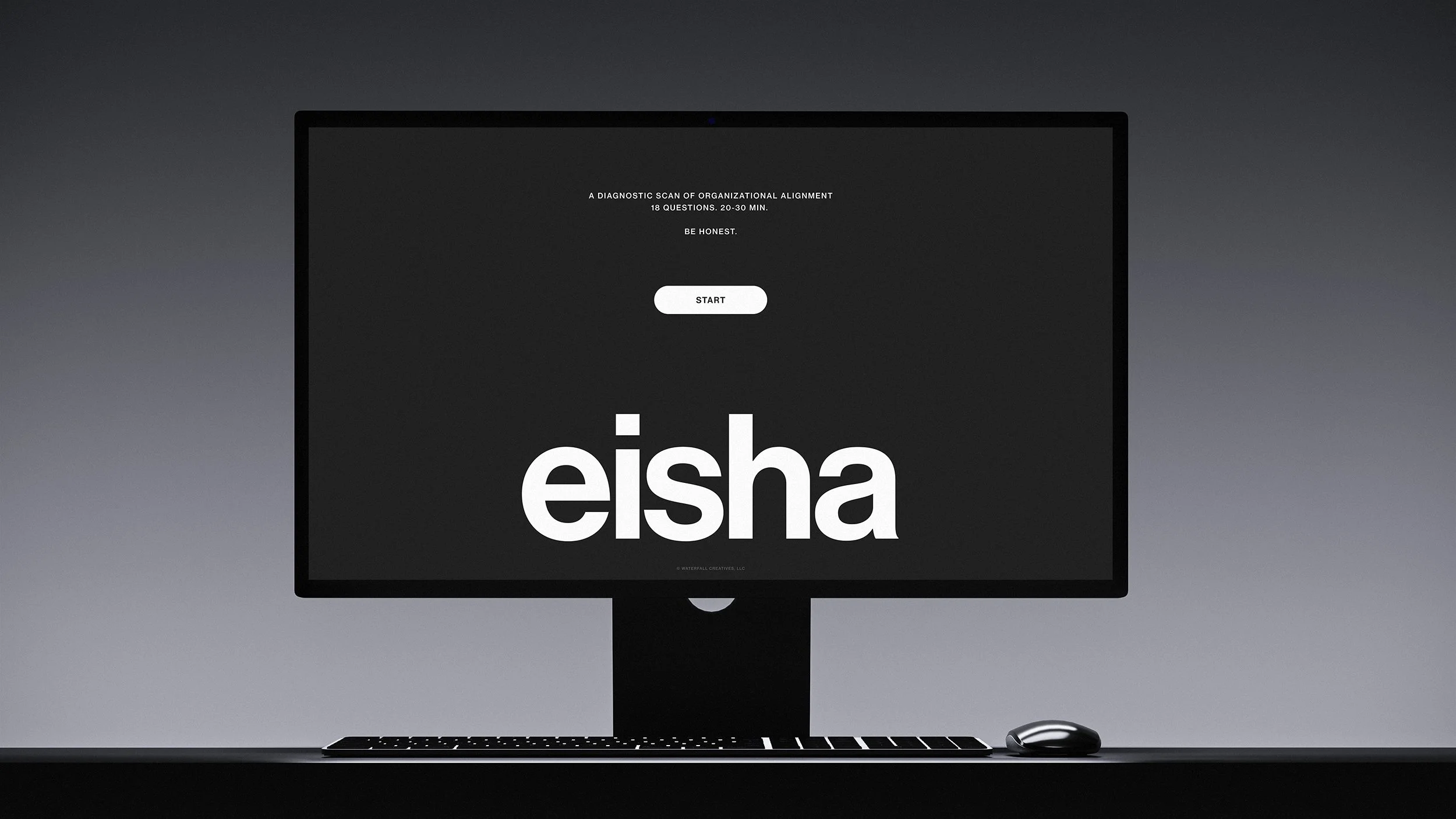
eisha
is a diagnostic scan of organizational alignment—revealing where intent and reality diverge by tracing the shadow between what leadership says and what the organization actually does.
Context
Truth Has a Cost
Most leaders know when something’s off. They feel it in the delays in decisions, the rehashed conversations, and the stalled projects. But clarity is uncomfortable. Facing structural misalignment means confronting what’s actually broken, not just what’s loud.
Design issues stem from unclear briefs. Execution failures stem from reactive decisions. Team burnout stems from misaligned priorities. The real fractures happen upstream—in the gap between leadership intent and operational reality. This gap is rarely visible until it becomes expensive: rework, decision debt, momentum lost to constant recalibration.
eisha (影写), meaning “tracing shadows,” exists to make the invisible visible before the cost compounds.
Insights
Where Organizations Quietly Break
Structural misalignment isn’t dramatic. It’s quiet. Teams say “yes” because of rank, not capacity. Initiatives stay alive because of ego, not results. Urgency replaces clarity in decision-making. Accountability gets delegated without authority. Speed masks deeper strategic confusion.
The Reality:
Research from UT Austin’s McCombs School shows that decision quality—judging decisions at the time they’re made, not by their outcomes—separates organizations that adapt from those that fracture. Most leaders make critical decisions without a structured framework, and that's where misalignment begins.
eisha traces where these fractures exist and what they’re costing the organization.
Approach
The Shadow Intake
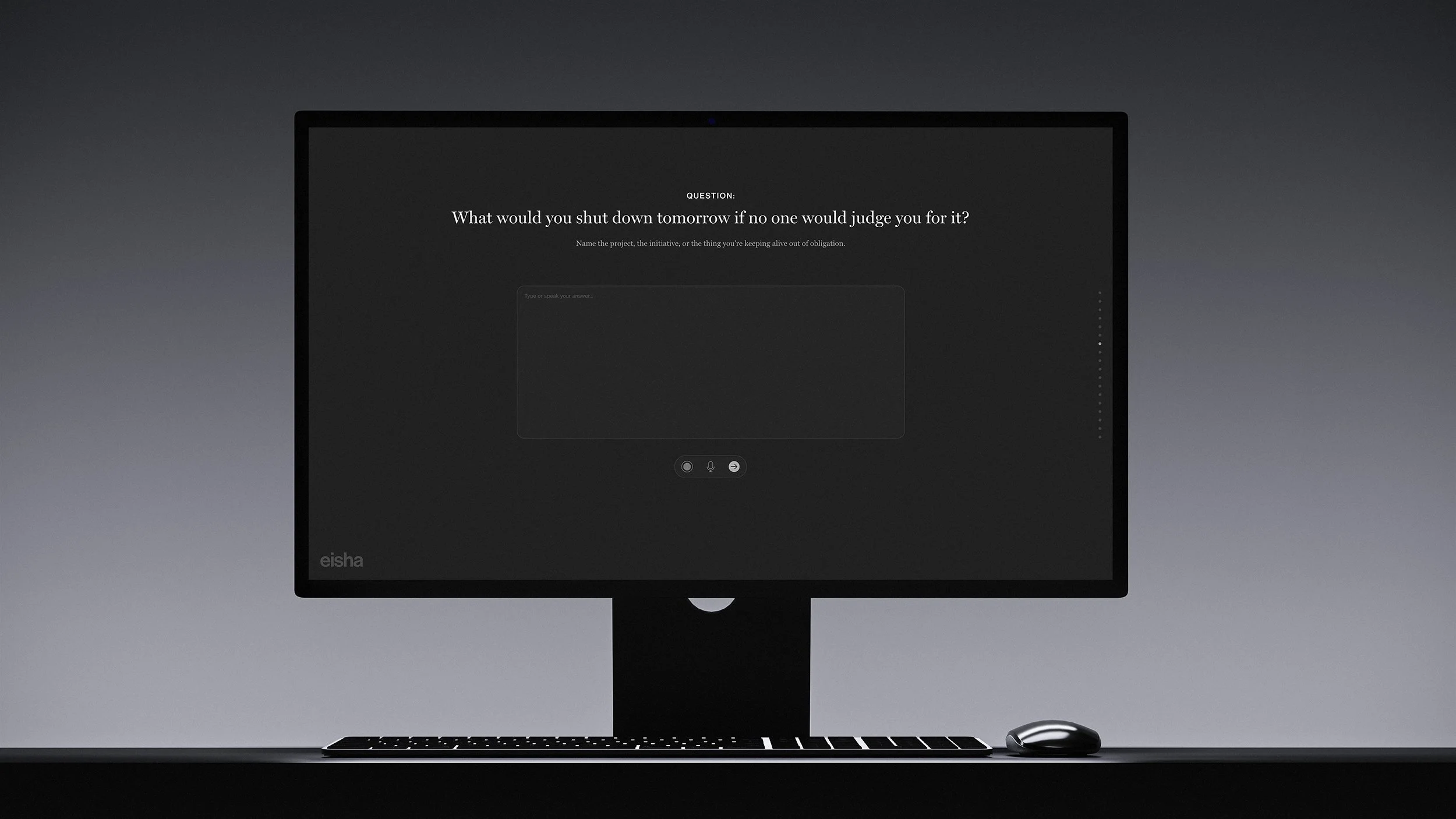
Leaders answer 18 questions designed to surface structural misalignment across eight facets from Shiki: Awareness, Leadership, System, Weave, Expression, Morale, Cycles, and Endings.
Each question bypasses surface narratives to reveal operational reality. Not “What do you believe?” but “What actually happened?”
Example questions:
“What would you shut down tomorrow if no one would judge you for it?”
“Where does urgency replace clarity in your decision-making?”
“Who on your team carries weight without having the power to make final calls?”
Format: Voice or text input
Time: 20-30 minutes
Output: A synthesis report identifying structural pressure points
The Synthesis
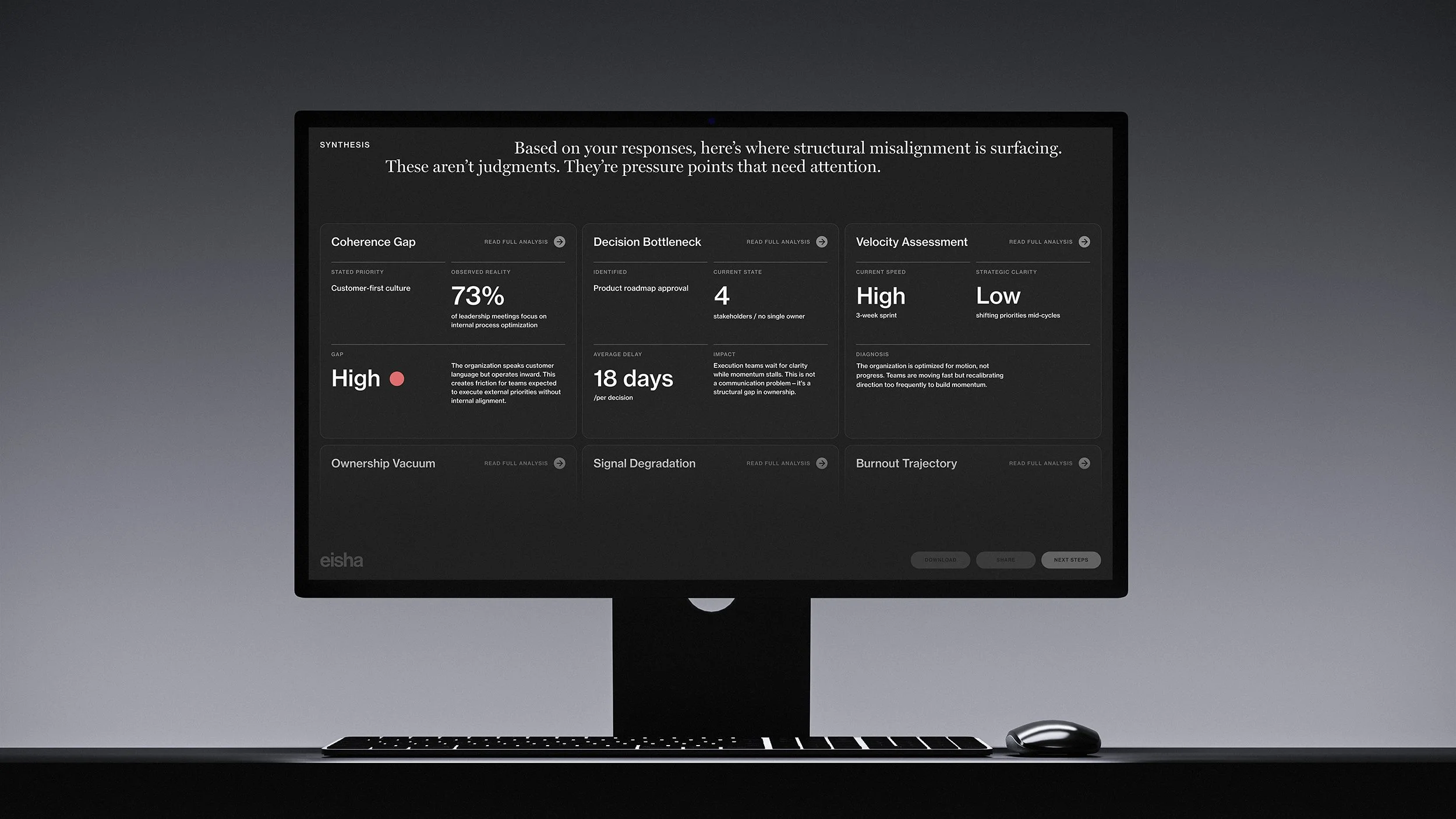
Based on responses, the system identifies where intent and reality diverge. The output isn’t a fluffy report—it’s a structural scan showing:
Coherence gaps between stated priorities and observed behavior
Decision bottlenecks where ownership is unclear
Velocity patterns that reveal motion without progress
Ownership vacuums where accountability exists without authority
Signal degradation where intent gets distorted moving through the organization
Burnout trajectories based on current pace and pressure
This data is uncomfortable. It surfaces what your team won’t say and what you might not want to hear. But these aren’t judgments. They’re pressure points that need attention.
Next steps
The concept will evolve through testing and refinement to build the depth analysis tools needed for full deployment.
Planned development:
Full 18-question intake structure
Multi-perspective AI synthesis engine
Expanded diagnostic modules
Integration with decision-making frameworks
Real-world testing with select organizations
Updates will be shared as the work progresses.
Related: Shiki
Published:january 29, 2026